Is Your Liver at Risk? Know About NAFLD
Your liver works tirelessly to keep you healthy, but what happens when it’s overburdened? Non-Alcoholic Fatty Liver Disease (NAFLD) is a growing concern in India, affecting millions.
What's NAFLD?
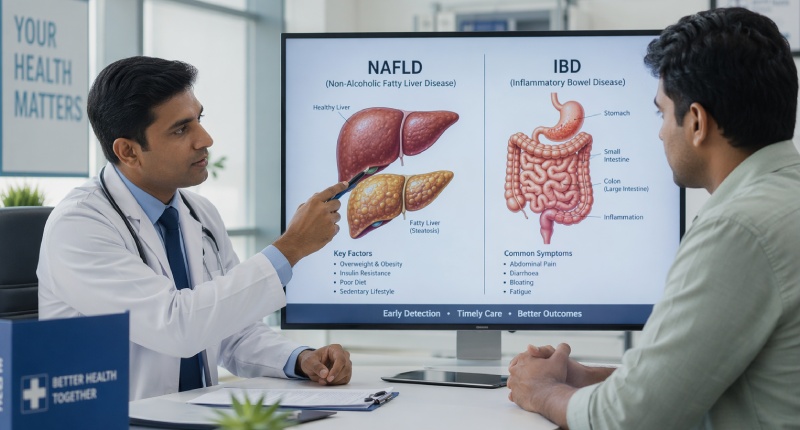
NAFLD is a condition where excess fat builds up in the liver, causing inflammation and damage – even if you don’t drink alcohol. It’s like a silent alarm, warning you to take action.
Why Should You Care?
- No symptoms, big risks : NAFLD often shows no signs until it's advanced, making early detection crucial.
- Lifestyle factors : Unhealthy eating, lack of exercise, and stress can all contribute.
- India's rising risk : With increasing obesity and diabetes, NAFLD is becoming a major health issue, affecting 20-30% of the population.
- Link to Metabolic Syndrome : NAFLD is closely tied to metabolic syndrome, a cluster of conditions that increase the risk of heart disease, diabetes, and stroke. Metabolic syndrome includes:
- High blood pressure
- High blood sugar
- Abnormal cholesterol levels
- Central obesity (excess fat around waist)
Detecting metabolic syndrome early is crucial, as it can help prevent NAFLD progression and related complications.
Are You at Risk?
Check if you fit these:
- Over 30 years old
- Overweight or obese
- Diabetic or high cholesterol
- Sedentary lifestyle
- Family history of NAFLD or metabolic syndrome
- Signs of metabolic syndrome (see above)
How to Detect NAFLD
- Blood tests : Liver function tests (LFTs) to check for elevated liver enzymes (ALT, AST)
- Fibroscan : Painless, non-invasive test to measure liver stiffness
- Ultrasound : Detects liver fat
- Other tests : APRI and FIB-4 scores to assess liver health
- Metabolic screening : Check blood pressure, blood sugar, lipid profile, and waist circumference to detect metabolic syndrome
Symptoms (If Any)
- Fatigue, abdominal pain, unexplained weight loss, or jaundice (in advanced cases)
The Progression
- Steatohepatitis (NASH) : Inflammation and liver cell damage
- Fibrosis : Scarring, leading to cirrhosis
- Cirrhosis : Advanced scarring, causing liver failure
- Liver cancer : Increased risk
- Cardiovascular risks : Metabolic syndrome and NAFLD increase heart disease and stroke risk
Take Control
Lifestyle changes :
- Lose 5-10% of your weight (e.g., 5-10 kg for 100 kg)
- Eat balanced: whole grains, fruits, veggies, lean proteins
- Exercise: 150 minutes/week
- Manage blood sugar, cholesterol, and blood pressure
Regular check-ups :
- Monitor liver health and metabolic markers if you're at risk
Treatment
- No magic pill, but lifestyle changes and managing underlying conditions help
- Vitamin E and omega-3s may be prescribed
- New treatments are being researched
Myths vs Facts
Myth: Only heavy drinkers get liver problems
Fact: NAFLD is lifestyle-related, not just alcohol
Myth: NAFLD isn't serious
Fact: It can lead to cirrhosis and liver cancer
Myth: Only obese people get NAFLD
Fact: Anyone with risk factors can develop it, even with normal BMI
Myth: Metabolic syndrome is just a combination of unrelated issues
Fact: It’s a cluster of linked conditions increasing cardiovascular and liver risks
Myth: You can't reverse NAFLD
Fact: Early-stage NAFLD can be managed and reversed with lifestyle changes, weight loss, and managing risk factors
Why Choose Us?
- Expert care : Dr. Santhosh R, experienced hepatologist
- Comprehensive tests : Fibroscan, ultrasound, and metabolic screening
- Personalized plans : Tailored to your needs
- Compassionate support : Your health, our priority
Know Your Risk. Act Now.
Don’t wait for symptoms. Get screened if you’re at risk. Consult us for expert advice.
Living with IBD: What You Need to Know
Inflammatory Bowel Disease (IBD) can be a real pain – literally. But with the right knowledge and support, you can take control of your symptoms and live a happy, healthy life.
What is IBD?
IBD, or Inflammatory Bowel Disease, is a chronic condition where your immune system mistakenly attacks the healthy tissues in your digestive tract, causing inflammation and damage. It’s an autoimmune disease, meaning your body’s defense system is overactive and targets your own gut.
What are the main types of IBD?
- Crohn's Disease: Can affect any part of your digestive tract (from mouth to anus), causing ulcers, pain, and blockages. It often affects the lower part of the small intestine (ileum).
- Ulcerative Colitis: Affects only the colon (large intestine) and rectum, causing inflammation and ulcers in the inner lining.
How does IBD differ from IBS?
- IBD (Inflammatory Bowel Disease) involves inflammation and structural damage to the gut.
- IBS (Irritable Bowel Syndrome) is a functional disorder with no visible inflammation or structural changes. Symptoms like abdominal pain, bloating, and bowel changes are common in both, but IBD is more severe and can lead to complications.
What Triggers IBD Flares?
- Food : Spicy, high-fiber, or dairy products can exacerbate symptoms. Keep a food diary to track your triggers.
- Stress : Not the cause, but stress can worsen symptoms. Try relaxation techniques like yoga or meditation.
- Smoking : Quitting can help manage Crohn's disease.
- Medications : Certain antibiotics and NSAIDs can trigger flares.
- Hormonal Changes : Some women experience worsening symptoms during menstrual periods.
- Infections : Gastrointestinal infections can trigger IBD flares.
Are You at Risk?
- Family History : If your parents or siblings have IBD, you're more likely to develop it.
- Age : Usually diagnosed between 15-35 years.
- Environmental Factors : Exposure to pollution, urban living, and Western diet may contribute.
- Gut Microbiome : Imbalance of gut bacteria may play a role.
Symptoms to Watch For
- Persistent diarrhea or constipation
- Abdominal pain and cramping
- Blood in stools
- Unexplained weight loss
- Fatigue and fever
- Joint pain and skin rashes (extraintestinal symptoms)
- Mouth sores and eye problems (in some cases)
Diagnosing IBD: A Step-by-Step Approach
1. Medical History :
Your doctor will ask about symptoms, medical history, and family history.
2. Physical Exam :
To check for abdominal tenderness, masses, or other signs of complications.
3. Lab Tests :
- Blood Tests : Anemia, inflammation markers (CRP, ESR), and infection screening.
- Stool Tests : To rule out infections, check for blood, and assess inflammation (calprotectin).
4. Imaging :
- Colonoscopy : Visual examination of the colon and rectum.
- Endoscopy : For upper GI symptoms.
- CT/MRI Scans : To assess damage, complications, or small bowel involvement.
- Capsule Endoscopy : For small bowel examination.
5. Biopsy :
Tissue samples to confirm inflammation and rule out other conditions.
Managing IBD: Treatment Options
1. Medications :
- Aminosalicylates (5-ASAs) : Anti-inflammatory (e.g., sulfasalazine, mesalamine).
- Corticosteroids : For acute flares (e.g., prednisone, budesonide).
- Immunomodulators : To suppress immune response (e.g., azathioprine, methotrexate).
- Biologics : Target specific proteins (e.g., anti-TNF agents like infliximab, vedolizumab).
- JAK Inhibitors : Oral medication for moderate to severe UC (e.g., tofacitinib).
2. Diet and Nutrition :
- Low-Residue Diet : During flares to reduce symptoms.
- Avoid Trigger Foods : Identify and limit or avoid them.
- Nutrition Supplements : For deficiencies (iron, vitamin B12, etc.).
- Enteral Nutrition : Liquid diet for malnutrition or pediatric cases.
3. Lifestyle Changes :
- Quit Smoking : Essential for Crohn's management.
- Stress Management : Yoga, meditation, CBT (cognitive behavioral therapy).
- Regular Exercise : Improves overall health and reduces stress.
- Adequate Sleep : Aim for 7-8 hours per night.
4. Surgery : For complications or severe cases:
- Colectomy : Removal of colon (UC) or affected bowel (Crohn's).
- Strictureplasty : Widening narrowed areas.
- Fistula Repair : Surgery for fistulas and abscesses.
Emerging Therapies and Research
- Stem Cell Therapy : Investigational for refractory IBD.
- Fecal Microbiota Transplantation : For C. difficile infection in IBD.
- New Biologics and Small Molecules : Ongoing trials for better treatment options.
IBD Myths vs Facts
Myth: IBD is caused by stress.
Fact: Stress worsens symptoms, but isn’t the cause.
Myth: IBD is a lifestyle disease.
Fact: IBD is an autoimmune condition, not caused by lifestyle choices.
Myth: IBD is just IBS (Irritable Bowel Syndrome).
Fact: IBD is a more serious condition with inflammation and structural damage.
Myth: IBD is curable with diet alone.
Fact: While diet helps manage symptoms, medication and other treatments are often necessary.
Myth: IBD only affects adults.
Fact: IBD can occur at any age, including children and teens.
Myth: Surgery is a cure for IBD.
Fact: Surgery can help manage complications, but IBD often requires ongoing treatment.
Myth: IBD means I'll never travel or eat out.
Fact: With planning and management, you can still enjoy travel and social dining.
Myth: IBD is contagious.
Fact: IBD is not infectious and cannot be spread to others.
Complications to Watch For :
- Osteoporosis : Long-term steroid use can weaken bones
- Colon Cancer : Increased risk with long-standing IBD
- Fistulas and Abscesses : Painful complications of Crohn's disease
- Malnutrition : Poor absorption of nutrients
- Anemia : Iron deficiency due to chronic blood loss
- Kidney Stones : Increased risk with certain IBD medications
Pregnancy and IBD
- Fertility : IBD may affect fertility in both men and women, especially with active disease.
- Pregnancy Planning : Consult your doctor to adjust medications and manage symptoms.
- Breastfeeding : Most IBD medications are safe during breastfeeding, but discuss with your doctor.
Why Choose Us for IBD Care?
At our hospital, we’re committed to giving you more than just treatment – we’re here to support your journey to wellness. Here is what makes us stand out :
- IBD Experts : Our team of gastroenterologists specialize in complex IBD cases, with years of experience in managing Crohn's disease and ulcerative colitis.
- Cutting-Edge Diagnostics : State-of-the-art endoscopy, imaging, and lab tests ensure accurate diagnosis and monitoring, so you get the right treatment, fast.
- Personalized IBD Care : No two IBD patients are alike. We craft tailored treatment plans addressing your unique symptoms, triggers, and lifestyle.
- Multidisciplinary Support : We work together to tackle all aspects of your health - physical and emotional.
- Latest Treatments : Access to biologics, JAK inhibitors, and clinical trials, so you benefit from the newest advances in IBD care.
- Ongoing Support & Education : Regular follow-ups, patient workshops, and a dedicated IBD helpline - we're here for you, every step of the way.
- Holistic Wellness : We focus on nutrition, mental health, and lifestyle changes alongside medical treatment, for a balanced approach to managing IBD.
Your IBD Journey, Our Priority
Don’t let IBD dictate your life. Consult our experts for compassionate, expert care tailored to you.
Frequently Asked Questions (FAQs)
Can IBD be cured?
IBD has no permanent cure, but medicines and lifestyle changes can help manage it effectively.
How does IBD affect daily life?
With proper management, most people lead active lives. Adjustments to diet, stress, and routine help.
What's the difference between IBD and IBS?
IBD (Crohn’s, colitis) causes inflammation and damage in the gut, while IBS is functional with no inflammation.
Can spicy food worsen IBD?
Yes, spicy food can trigger symptoms in some people. Track your triggers with a food diary.
Can IBD affect pregnancy?
With controlled IBD, pregnancy is generally safe. Consult your doctor to plan.
What diet is best for IBD?
Eat simple, balanced meals. Avoid dairy, high-fiber, and spicy foods during flares. Consult a dietician.
Does stress cause IBD?
Stress doesn’t cause IBD, but it can worsen symptoms. Try yoga or meditation to help.
Are there any alternative therapies for IBD?
Some people explore acupuncture, probiotics, or herbal remedies, but consult your doctor before trying.
How often should I follow up with my doctor?
Follow-ups depend on your condition. Generally, every 3-6 months or as advised by your doctor.
Can I exercise with IBD?
Light exercise like yoga is helpful, but avoid intense workouts during flares. Consult your doctor.
Can I travel with IBD?
Yes, plan ahead with medications, bathroom access, and hydration.
Is fasting safe with IBD?
Fasting can cause dehydration and nutrient loss. Check with your doctor first.